Update June 2026
The month of June is a significant milestone for the Basilica of the Sagrada Família, as it welcomed Pope Leo XIV. This visit made Leo XIV the third Pontiff to visit the Sagrada Família, a symbolic gesture that commemorates the centenary of the death of Antoni Gaudí, the architect who devoted the final years of his life to the construction of this building.
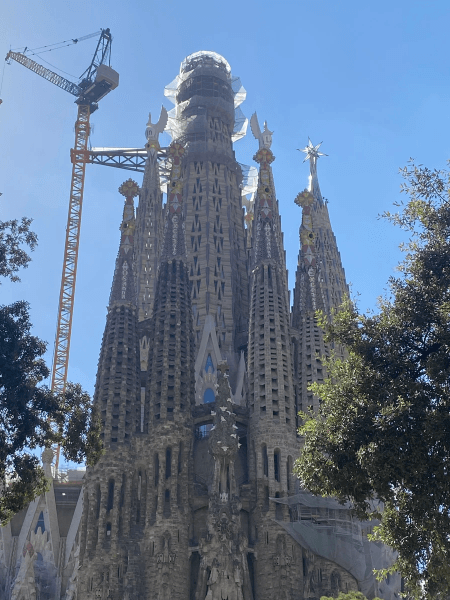
La Sagrada Família was designed to comprise three distinct facades (Nativity, Passion and Glory), 18 towers, a huge 12-point star, multiple complex hyperboloids and parabolic arches, vaulted ceilings, and up to 18 sculptures of biblical figures, from the 12 apostles and four evangelists to Jesus Christ and the Virgin Mary.
The final phase of construction is now over and visitors can explore a variety of chapels, attend Mass, marvel at stained-glass windows, meander through tree-like columns and even climb one of the church’s towers.
While the grand basilica’s exterior is now finished, the focus will shift to La Sagrada’s interior, where decorative elements, artistic details, structural reinforcements and detailing within the towers remain in progress.
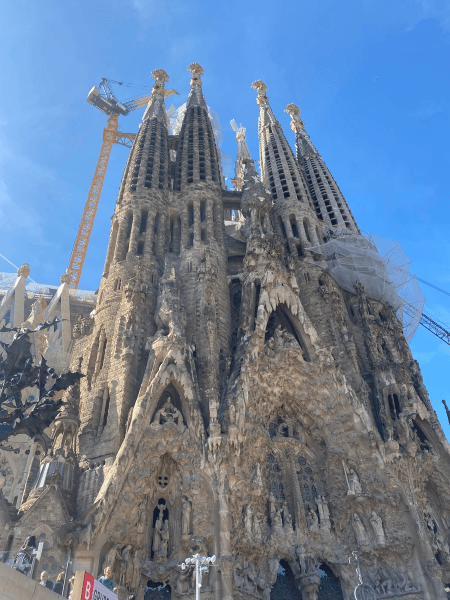
I’m not about to write a long blog about Antoni Gaudí , you can look up his life works and especially the design and architecture if you’re interested. But I was obsessed, and still am ,with anything I could read while immersed in Barcelona on this visit.
You’ve probably heard the story about his death. He “died on June 10, 1926, after being struck by a tram while heading, as he did every evening, towards the Sagrada Família from the Sant Felip Neri church.
After the impact, he lost consciousness, and no one suspected that the elderly, dishevelled man was the famous architect. He was taken to the Hospital de la Santa Creu, where he was later recognised by the priest of the Sagrada Família.
His funeral took place two days later at the Sagrada Família, after a massive public ceremony. Many Barcelonians took to the streets to say their final goodbyes to Gaudí, the most universally recognised architect the city had ever seen”. 1
During my visit I was able to join a few tours where experts spoke about his life and were often unclear of whether to call him a madman or a genius.
It’s undeniable that the ideas of Gaudí even at a young age were not just a rehash of what had been done before, nor would they leave anyone indifferent. He came of age at an interesting time, coinciding with the arrival of electric lighting in Barcelona (the first major power plant was from 1883).
He wasn’t just an architect and he took pleasure in the detail of the décor as well, working on projects for workers’ cooperatives, cinemas, bars, and restaurants, and having major input into the design of furniture, lamps, and shop windows.
He also had the benefit of support from affluent Catalan bourgeoisie, who returned from Cuba with a lot of money and were keen to show off the Gaudí work they’d commissioned, which is said to have given rise to the birth of Catalan Modernism.
But the most ambitious venture was no doubt one of Barcelona’s most iconic landmarks,the church Sagrada Familia, that he started work on in 1883 until his death in 1926. Gaudí had abandoned all other pursuits to focus exclusively on its construction.
He eventually moved to into the basilica, sleeping surrounded by his models and drawings, in one of the city’s humblest neighbourhoods, immersing himself completely in his work and an ascetic life. By the time he died at age 73, Gaudí had changed dramatically. He had become 'extremely devout', a vegetarian and was living modestly.
“This deeply Catholic man, who started as the architect of the people and lived his fullness working for the bourgeoisie, ended up becoming what some define as the architect of God.” 2
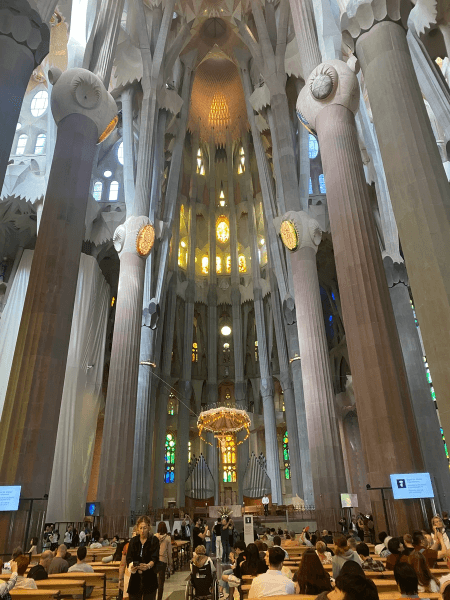
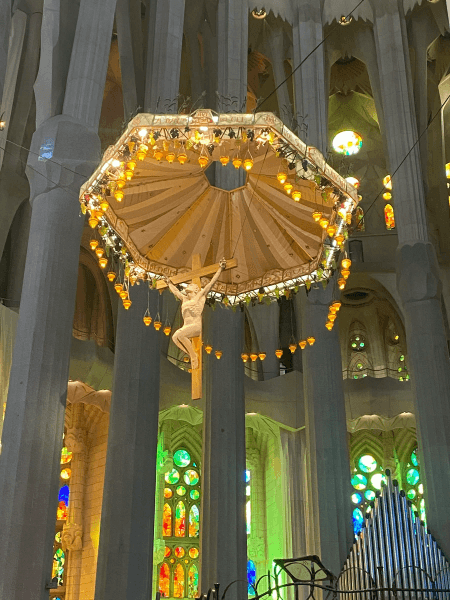
Of most interest was the signs pointing to his possible neuro-divergence. “While he wasn't formally diagnosed, many historians and psychologists suggest he displayed traits consistent with neuro-divergence, due to his intensely visual focus, social isolation, rigid routines, unique spatial thinking, hypersensitivity (especially to colour), and preference for 3D models over drawings, which set him apart from peers and fueled his revolutionary, nature-inspired designs”. 3 What a gift this trait was and is.
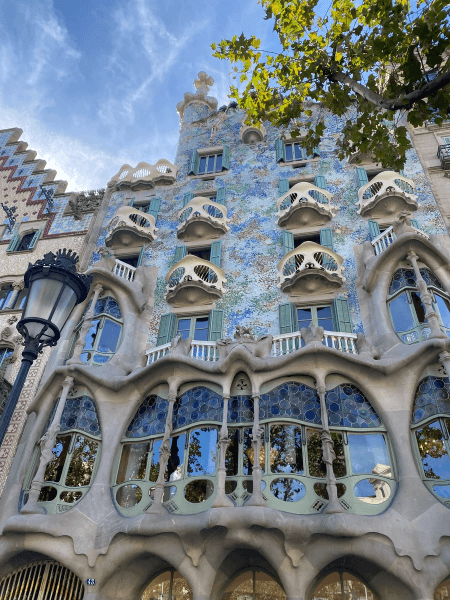
Casa Batlló Contemporary continues Gaudí’s spirit
This Christmas 2025–26, the lighting of Casa Batlló’s façade will highlight its commitment to autism and will be accompanied by a donation to the Fundación Adana and the Associació Aprenem Autisme.
Casa Batlló Contemporary continues Gaudí’s radical and ground-breaking spirit and create exhibitions, performances, commissions, and dialogues—permanent and ephemeral, local and global—that bring his work to life. 4
Australian link
I also love the Australian link to La Sarada Familia in the form of a Melbourne architect, Professor Mark Burry. He has spent decades digitally interpreting Gaudí's complex plans, using technology to realise the vision, alongside British-Australian engineer Tristram Carfrae, with RMIT University also establishing a strong presence in Barcelona, fostering architectural exchange.
For over three decades, Mark has been untangling the mysteries left in Antoni Gaudí's masterpiece, which was less than one-quarter done when he died in 1926. Much of the work was paused during the Spanish Civil War [from 1936–39] and many of the models and drawings were destroyed.
“Professor Burry knows that La Sagrada Família's perpetual incompleteness is actually part of its charm”. 5
While there’s no set date for the completion, it's close and achievable.
“My client is not in a hurry.” — Antoni Gaudí
I first visited La Sarada Familia in 1998, where it was still looking like a big build, but this year I was overwhelmed by its progress and with its aim to complete the main construction in 2026, marking 100 years since Gaudí's death. While Covid has put this date on hold, the interiors look amazing and there's clarity about whats left to do.
The Jesus Christ Tower and Chapel of the Assumption are slated for completion that year, though the grand entrance stairway might extend completion to around 2034. Construction relies heavily on tourism revenue, overcoming past hurdles like war, funding issues, and the pandemic, with advanced tech now speeding things up.6
I think I've been taken by the longevity of the project and the commitment, more so in later years, to see this through, keeping to Gaudí's vision and his essence.
References
1 -https://www.casabatllo.es/en/antoni-gaudi
2-https://www.casabatllo.es/en/antoni-gaudi/works
3- https://thecastlehome.blogspot.com/2014/03/antoni-gaudi-beautiful-creative.html
4- https://www.casabatllo.es/en/visitor-care-service-teams/
5-https://www.abc.net.au/news/2023-12-08/antoni-gaudi-legacy-la-sagrada-familia-barcelona/103177568
6- https://www.barcelona-tickets.com/sagrada-familia-tickets/sagrada-familia-finish-date/
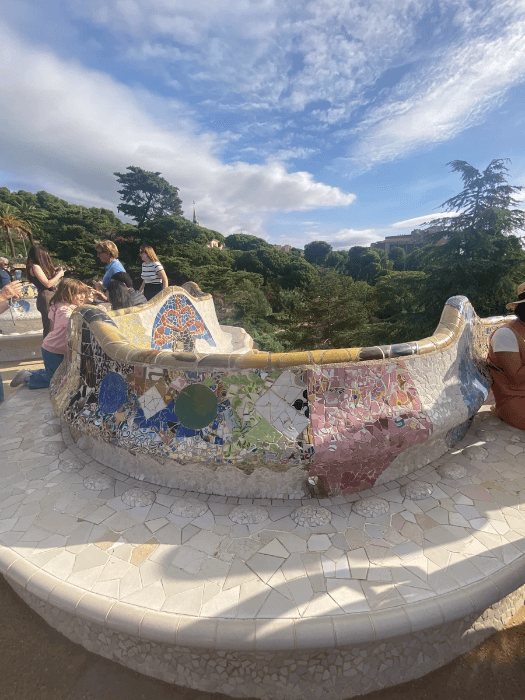
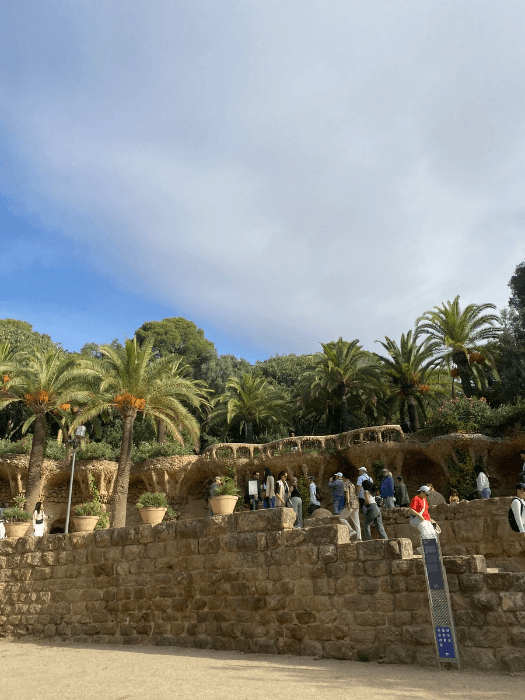
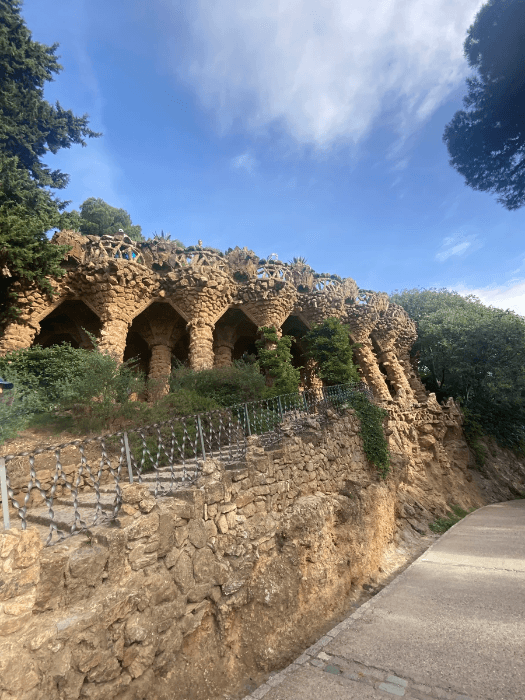
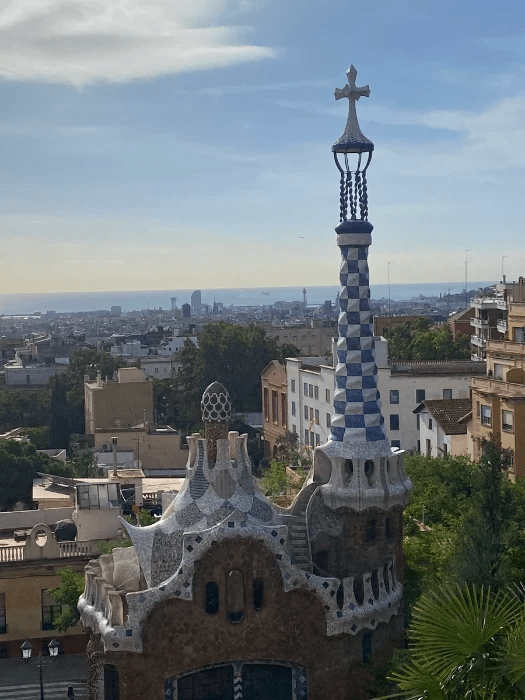
Park Guell